
Oakridge College
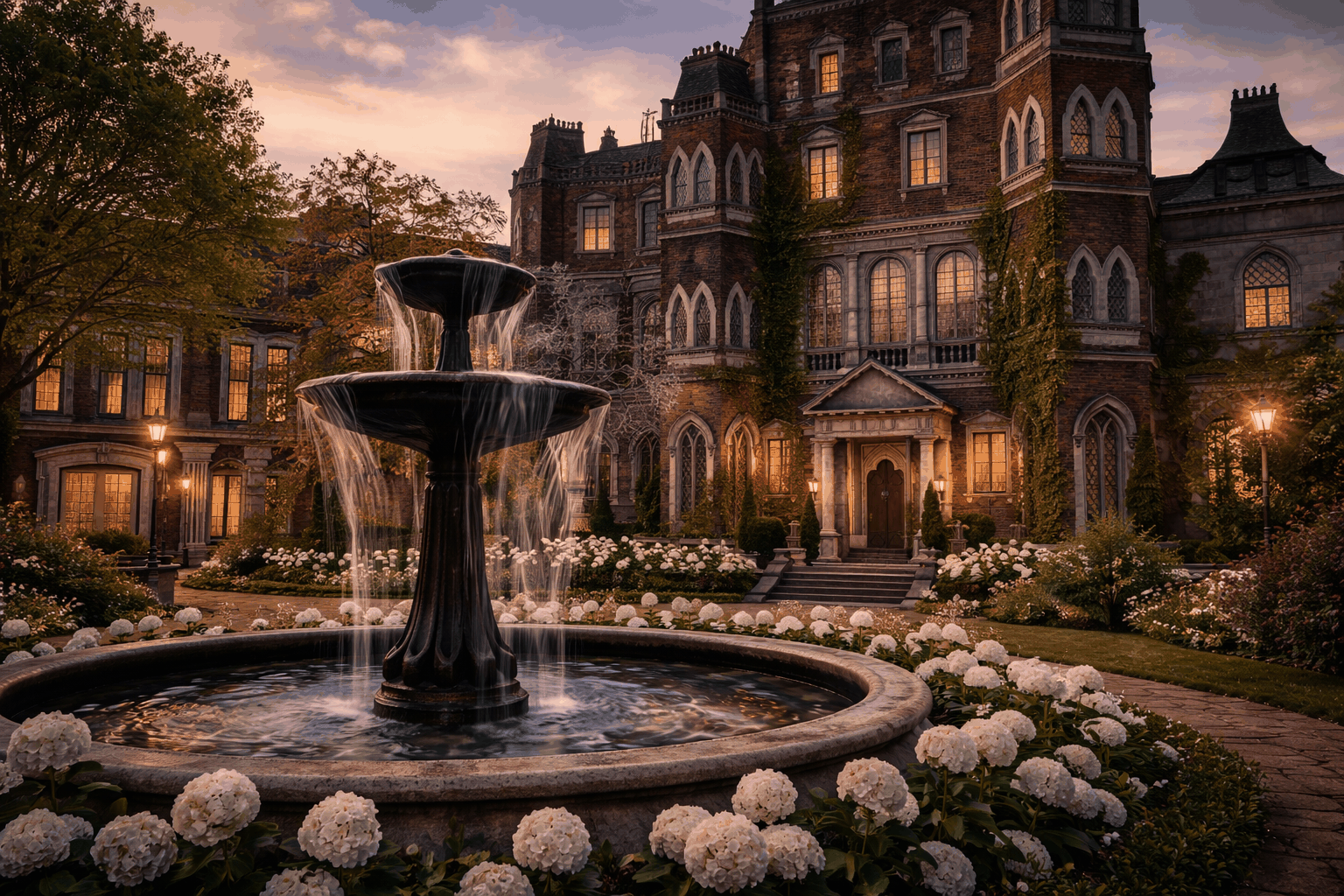
| Oakridge College | |
| Type | Educational, School/Academy |
|---|---|
| Founded | July 1st, 1947 |
| Leader title | President of Oakridge College |
| Notable members | Arthur Bellamy Theodore Crenshaw |
| Other members | Fen Calloway Holt Briggs Ward Ashton |
It was the condition of the land itself, not just the estate, but the wider region, Elias Hartwell's operations had transformed, that eventually determined the property's future.
By the mid-1910s, a growing number of voices in Briarmont and the surrounding region were calling for a formal, sustained effort to study the damage that decades of industrial logging had inflicted on the coastal landscape. The eroded hillsides, the degraded watersheds, the vanishing salmon runs: these were not abstract concerns but immediate, practical problems affecting the livelihoods of people who still lived and worked in the area. At the same time, the old-growth stands that survived in the upper mountain ridges had begun to draw researchers and naturalists from beyond the region, drawn by the chance to study intact redwood ecosystems that were rapidly disappearing elsewhere along the coast.
In 1918, the Briarmont trust formally established the Oakridge Institute of Forestry and Land Sciences on the grounds of the former Hartwell estate. The institute's founding mission was practical and immediate: to study sustainable harvesting practices, land management, and the long-term stewardship of the redwood forests that defined the region. From the beginning, Oakridge maintained a close working relationship with the land itself. Early programs focused on surveying, ecology, and forestry sciences, often in direct connection with active logging operations that continued in the area. Researchers used the surviving old-growth stands in the mountains as baselines for understanding what healthy redwood ecosystems looked like, and the degraded lowlands around the estate as living laboratories for studying recovery, erosion control, and watershed restoration.
The institute quickly gained a reputation for rigorous, place-based research that was ahead of its time. Its scientists produced some of the earliest detailed studies of redwood regeneration, soil recovery after clear-cutting, and the relationship between forest cover and watershed health. That work drew attention from the nascent U.S. Forest Service and from conservation organizations that were beginning to advocate for the permanent protection of old-growth stands along the coast. Field records, boundary surveys, and regional documentation became central to the institute's work, forming the basis of what would later become one of the most extensive local archives in Northern California.
STRUCTURE
In its founding years, Oakridge was governed more like a serious research institute than a modern college. Authority rested in the Briarmont trust, while the institute’s intellectual and practical identity was shaped chiefly by Theodore Crenshaw as the first head researcher. He was not a president in the later collegiate sense, but the leading scholarly figure of Oakridge’s original phase, setting its tone, methods, and priorities./p
That changed in 1947, when Oakridge completed its transition into an accredited college. At that point, a more formal academic hierarchy emerged. Arthur Bellamy was appointed Dean of Academics and Interim President, placing him at the center of the school’s postwar reorganization. From this period forward, Oakridge can be understood as operating under a more recognizable collegiate structure, comprising a president, deans, administrative officers, and the broader institutional framework necessary for an accredited educational institution. Bellamy, therefore, belongs not to the institute’s founding order but to the first fully formalized administrative order of Oakridge College.
ASSETS
In local memory, the transition from institute to college is often symbolized by Theodore Crenshaw’s ceremonial handover of Hartwell Manor to Arthur Bellamy in 1947. Whether remembered as a formal transfer of keys or simply as the passing of authority, the moment came to represent more than an administrative change. It marked the end of Oakridge’s founding, restoration-centered era and the beginning of its more formal life as an accredited college under Bellamy’s leadership.
HISTORY
Before Accreditation
Oakridge began not as a college, but as the Oakridge Institute of Forestry and Land Sciences, established in 1918 on the grounds of the former Hartwell estate. Its founding mission was practical and immediate: to study sustainable harvesting, land management, watershed recovery, and the long-term stewardship of the redwood landscape damaged by Hartwell’s operations. From the beginning, the institute was shaped by fieldwork, ecological study, and direct engagement with the land itself. Under Theodore Crenshaw, its first head researcher, Oakridge developed a reputation for rigorous place-based research and for taking damaged ground seriously, not as scenery or sentiment, but as a problem requiring patience, discipline, and honest study./p
Transition to Educational Institution
By the mid-twentieth century, Oakridge had begun to outgrow the narrow structure of a specialist institute. As the timber economy declined and the institution broadened its academic ambitions, Oakridge moved toward a fuller collegiate identity. That transition culminated in 1947, when Oakridge achieved accreditation and formally emerged as Oakridge College. At that turning point, Arthur Bellamy was appointed Dean of Academics and Interim President, becoming the public face of expansion, institutional legitimacy, and administrative modernization. The transition did not erase the institute’s original mission, but it did mark the end of its founding era and the beginning of a more formal academic structure./p
Modern Era
Modern Oakridge remains shaped by both phases of its history. It is a college, but one still grounded in the values established during the institute years: stewardship, archival depth, and long-view attention to place. Its academic scope expanded into the arts, humanities, and coastal sciences, yet its founding orientation toward environmental understanding and regional memory remained intact. Hartwell Manor, once the seat of industrial authority, now stands as the symbolic and operational heart of the college, linking its extractive past to its academic present.
Ranks & Positions
Department Chair— Education, Certification and Career Programs | |
Department Chair— Legal Studies, Criminal Justice and Public Administration | |