
How to roleplay at Briarmont
Briarmont is a roleplay town. It runs continuously, the people you meet are characters, and the story has no start time and no closing bell. This guide covers what we expect of you, how a scene works turn by turn, and how the HUD, dice, standing, jobs and quests get played inside a scene.
If you read only one section, make it the next one. The rest of this guide is craft you can pick up as you go. That section is the rule.
You are in character. Everywhere.

If you are on Briarmont land, you are in character. Not "in character in the café." Not "in character during events." Anywhere in the community, at any hour, standing anywhere. You are a person in a town, and so is everyone around you.
This is what makes Briarmont feel like a place. When half the street is talking about work tomorrow and how bad the traffic was, the town stops being a town and becomes a group of people standing in a very detailed room. We take this seriously, and everyone who spends time here is held to it.
What that means in practice:
- Local chat is in-character chat. Treat every word you type there as words your character says out loud, in public, where anyone nearby can hear them.
- You are always visible. Sitting quietly at the bar with nothing to say is fine and normal; your character is a person having a quiet evening. Being AFK at a table is fine too. Neither one licenses out-of-character talk.
- Being new is not an exemption. You do not need a deep backstory or a perfect look. You need a name and a reason to be standing where you are standing, and that will carry you through your first day.
- Nobody is expecting a performance. In character does not mean eloquent. Short, plain posts are welcome.
Marking yourself OOC
You can set your titler to OOC through the HUD (Titler → mode). Do that when you genuinely need to step outside the story: you are fixing your avatar, you are half-away, you are handling something in real life.
Marking yourself OOC changes what your titler says. It does not open public chat. An OOC titler tells people not to interact with you in character. It is not a license to start talking out of character in local chat. Move to the edge of a scene, set the titler, and go quiet, or step off the sim entirely.
Note. If you are OOC in a public space, stand somewhere clear of an active scene. An OOC avatar in the middle of the room breaks the picture for everyone playing around it.
Where the line is
Nobody is going to pull you aside over one slip. You will answer something out of character in local chat by accident, or forget where you are for a line, and it will not matter to anyone.
We enforce this on pattern. What staff act on is someone who has been asked and keeps going: holding out-of-character conversations in public chat, treating a room full of people mid-scene as a group chat, doing it again the week after it was raised with them. At that point it has stopped being a slip and become something everyone else has to play around.
Repeat offenders are handled the way any other breach of the Community Covenant is: a private word first, then a formal warning, then removal if it continues.
The private word comes first for a reason. Most people who get one had not noticed they were doing it, fix it the same day, and never hear about it again.
When OOC is allowed, and where it goes
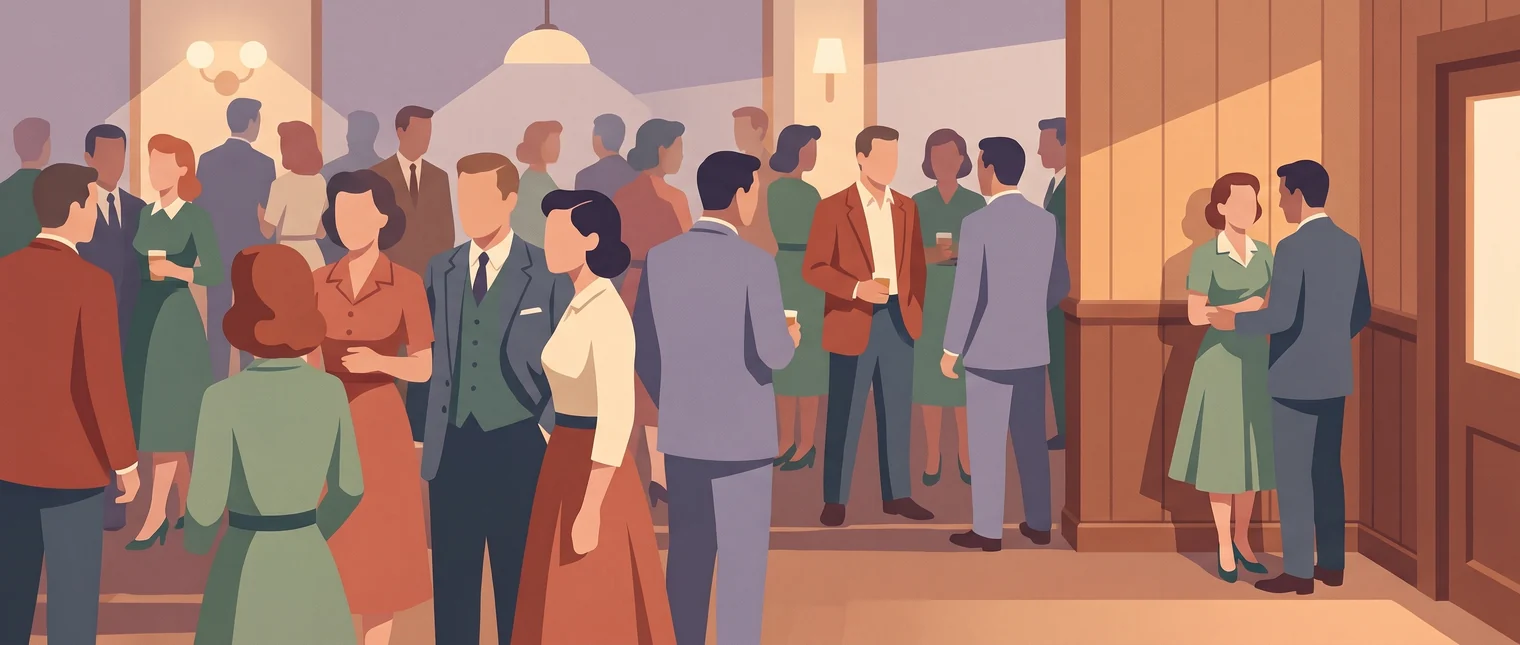
There are real reasons to break character. There are not many of them.
Use OOC when:
- You need to check consent before a scene escalates: violence, injury, anything sensitive.
- Someone needs to coordinate what the scene is doing, and it cannot be worked out in-story.
- Something has genuinely gone wrong, such as a rules problem, a technical failure, or someone being uncomfortable.
- You have to leave and people are waiting on your post.
Where it goes, in order of preference:
- Instant message. Almost every OOC exchange belongs here: consent checks, "are you still there?", scene planning, apologies for lag. Reach for this first.
- Discord. For anything longer than a couple of lines, anything involving staff, and anything that is really a community conversation rather than a scene conversation.
- Local chat, in double parentheses, as a last resort.
(( brb two minutes ))
The third option exists for the case where you need to reach four people at once, mid-scene, right now, and no other channel will do it. Use it for that.
Be sparse. If you are typing OOC in local chat more than rarely, something has gone sideways. A scene that needs constant OOC narration is a scene to plan in IMs.
(( crashing, sorry. back in five ))
(( I have to go, my character steps out to take a call ))
Both are short enough to disappear into the scene, and neither one opens a conversation.
Note. In Firestorm you do not have to type the brackets. Write the line and press Alt+Enter instead of Enter, and it goes out wrapped in double parentheses for you.
Note. Out-of-character knowledge stays out of character too. If you read on Discord that a character was arrested last night, your character learns it when someone tells them in a scene. See Metagaming, below.
Your first scene
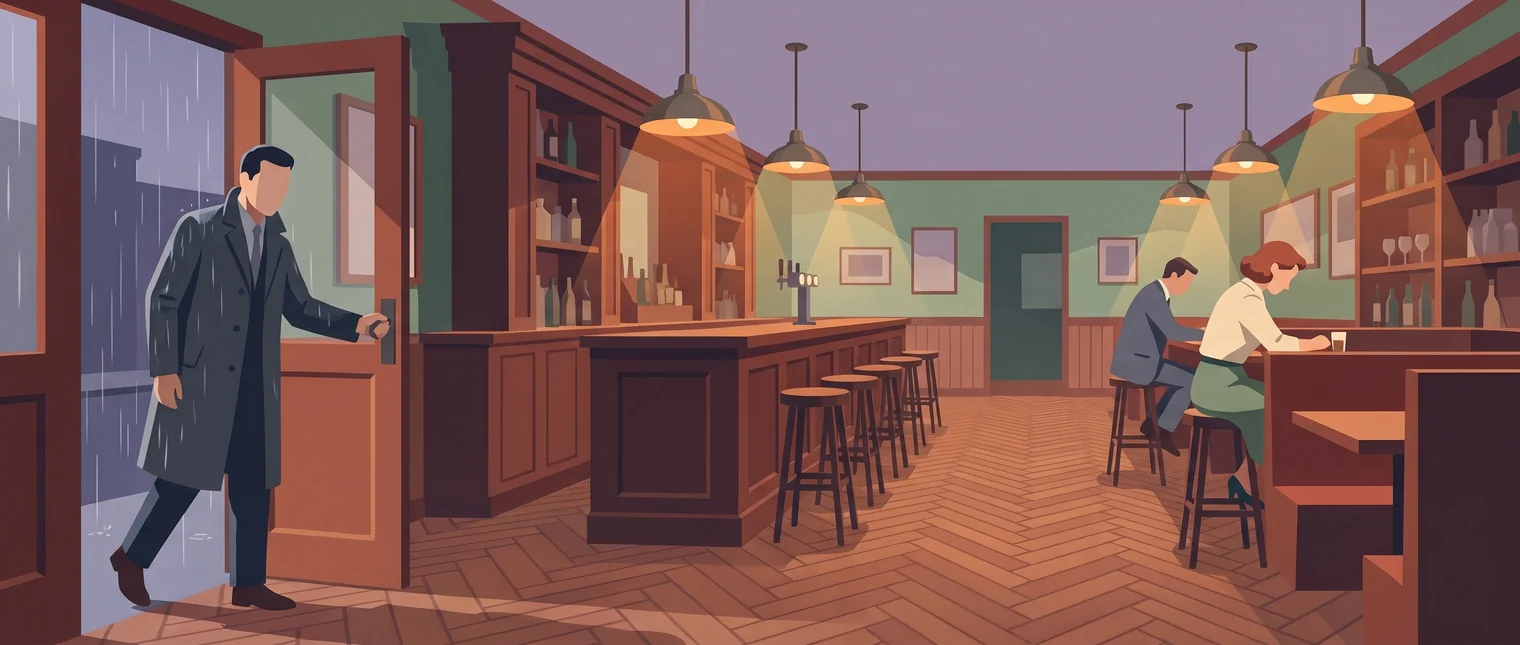
The mechanical part is small.
- Wear the HUD and the titler. Both are required in shared spaces. The HUD is your control panel; the titler is how other players know who they are looking at and whether you are open to play.
- Pick your character. HUD → Profile → choose your active character. Most of the town's systems need an active character before they will do anything, and your dice rolls use that character's name. If you skip this, the HUD will usually open Profile for you.
- Go somewhere people are. HUD → Map → pick a region and a landmark. Windjammers, Main Street, the campus, and the town hall are all reliable.
- Walk in and post.
The hardest part of a first scene is the first post, so make it small. You do not need to introduce yourself, explain your history, or be interesting. You need to exist in the room:
/me pushes through the door, shakes the rain off her coat, and looks for somewhere to sit that isn't the bar.
That gives everyone in the room something to work with: you are wet, you are new, you would rather not be noticed. Any of the three is a hook someone can pull on.
Joining a scene already in progress
Walk in and post an entrance. Read a few posts before you reach for anyone's attention, and find the seam rather than interrupting an exchange to announce yourself. If the scene is clearly a private conversation between two people, give it room or take a seat elsewhere.
If you are unsure whether a scene is open, a one-line IM to someone in it costs nothing.
Writing a post
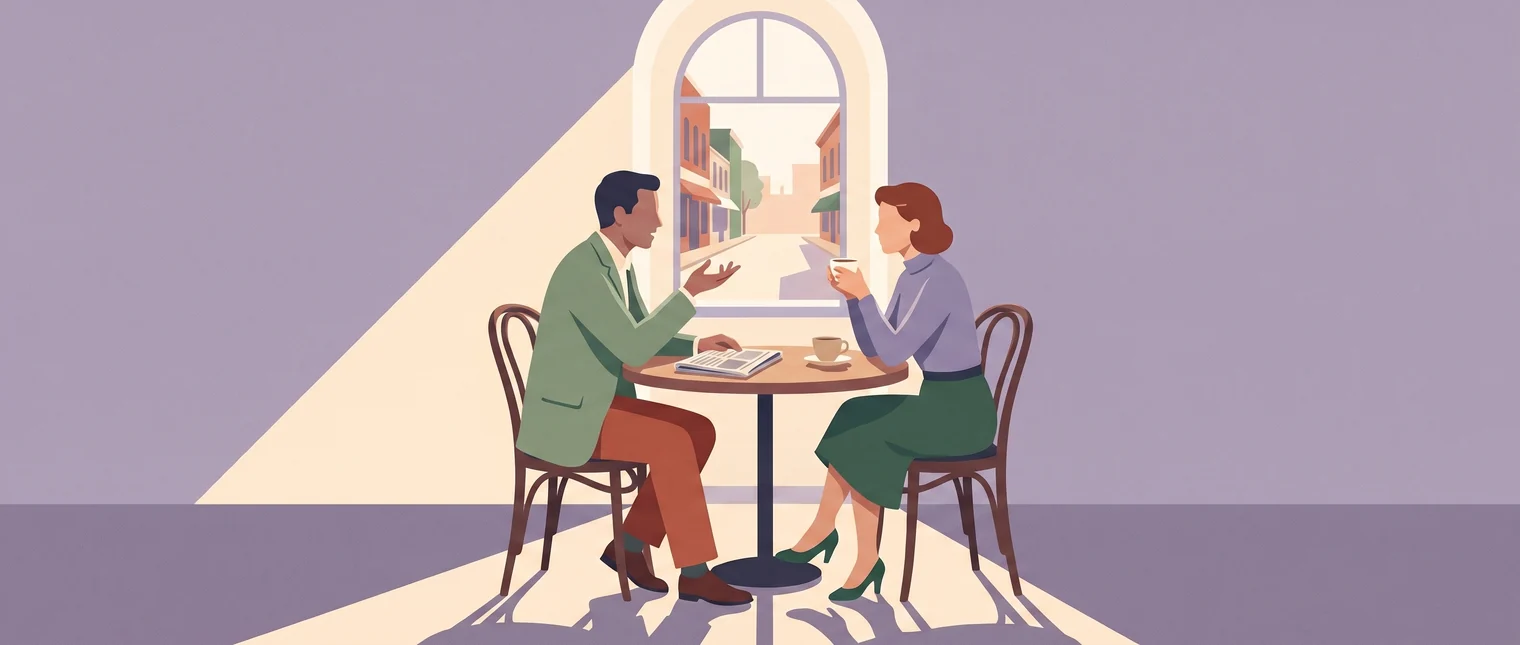
What your character does and what your character says go out together, in one post, written the way a paragraph of a novel is written.
Start every post with /me, then write it straight through, with speech in quotation marks:
/me sets the folder on the desk and slides it across with two fingers. "You'll want to read that before you sign anything." She stays standing.
Action, dialogue and the beat after it are all one send, in one voice. That is the house style, and it is most of what makes a Briarmont scene read like a story rather than a transcript.
Two things we do not use:
- The
*asterisk*emote style. Use/me. - Dialogue typed bare into local chat. Speech goes inside your
/mepost, in quotation marks, so it carries your character's name instead of your avatar's.
The titler, and channel 4
Your posts reach the town through your titler, which listens on channel 4. Written out in full, the line above starts like this:
/4 /me sets the folder on the desk and slides it across...
You do not have to type the /4. The HUD package includes a gesture that adds it for you, so /me is all you ever need. Pick the package up at the train station lobby in the landing zone, and make sure the gesture is switched on afterwards (Firestorm: Comm → Gestures, or Ctrl+G).
Note. If the gesture stops firing, open it and look for a trailing space after
/mein the Trigger field. A space there stops it matching, and it is invisible in the editor. That accounts for most cases; failing that, check the gesture is switched on rather than just sitting in your inventory.
Because your words arrive through the titler, your viewer treats them as object chat rather than avatar chat and colours them accordingly. In Firestorm you can set that under Preferences → Colors → Chat Color → Objects.
Immersive mode
The HUD's RP pencil opens a menu with an Immersive option. Turn it on.
It does two things. It hides other players' nametags, so you are looking at a town rather than a room full of usernames. And it attributes everything you type to the character you are playing rather than to your avatar, which means nobody can accidentally read your account name off your own dialogue.
Double parentheses are left alone, so (( )) still reads as out of character.
A few habits make your posts easy to play with:
- One major thing per post. Enter the room or start the argument. Every action you stack on top of another is an action nobody gets to respond to.
- Write what is observable. Other players can only respond to what their characters can see and hear. Your character's private thoughts stay yours; if they matter to the scene, find a way to show them.
- Third person, past or present. Pick one and stay with it. Nobody will correct you. Consistency just reads better.
- Clarity beats prose. A plain post everyone understands is worth more than a beautiful one that leaves people unsure what happened.
- Match the room. In a crowded bar, keep posts short so the rotation moves. In a two-person scene on a porch at midnight, stretch out.
Note. Briarmont sets no minimum post length and requires no particular style. Short conversational play, long descriptive paragraphs, and everything between are all welcome. Adapt to the people you are with.
Post order
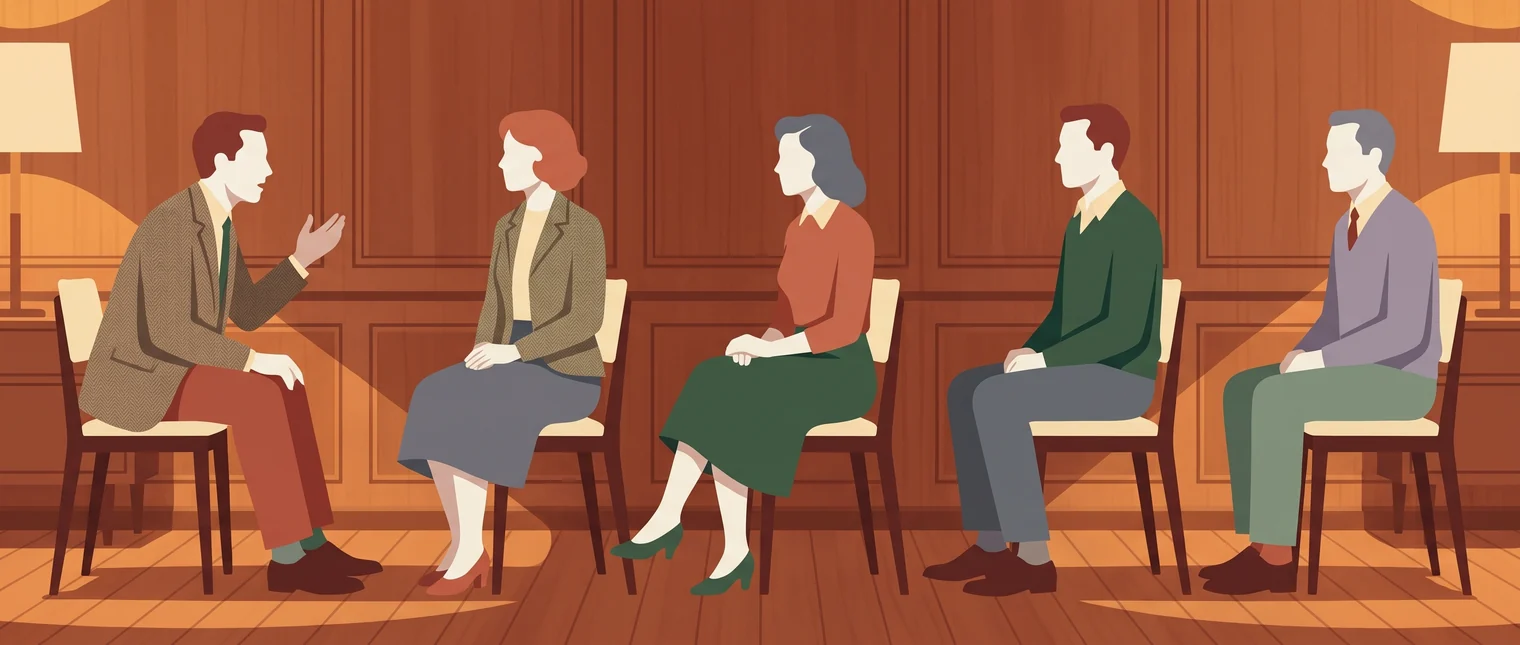
This is the part that most often goes wrong, and the easiest to get right.
Any time two or more people are in a scene, you take turns. Everyone posts once, in a consistent order, and then the rotation comes back around. You wait until everyone in the scene has had their turn before you post again.
How the order gets set
Usually nobody announces it. The order settles into whoever arrived first, or whoever posted first, and everyone follows it. That works fine for two or three people.
For larger scenes, or anything with stakes, say it out loud once at the start:
(( post order: Nikolina → Rai → Tomas → me ))
One OOC line at the top, and then nobody has to think about it again. This is what local-chat OOC is for.
Playing your turn
- Wait for the person before you. That is the entire mechanic.
- Respond to what actually happened. Your post should acknowledge the post before it. If three people posted while you were typing, edit before you send; a post answering a moment that has already passed derails the scene for everyone.
- Keep reading while you wait. Post order is not permission to go and make coffee.
- Someone joining goes to the end. A new arrival posts their entrance, then slots in after the last person in the rotation.
When someone stalls
People crash, lag, get called away, and type slowly. Give a stalled turn a couple of minutes. Genuinely a couple, because plenty of people are composing a paragraph rather than ignoring you.
After that, move on. Skipping a turn is a small discourtesy; freezing eight people for fifteen minutes is a large one. If it keeps happening with the same person, IM them.
If you are the one stalling and you know it will be a while, say so:
(( skip me this round ))
Leaving a scene
Post your exit the way you posted your entrance. A character who evaporates mid-conversation leaves everyone else holding a scene with a hole in it.
/me drains the last of the coffee, drops a few bills by the saucer, and heads for the door without looking back.
If you have to go instantly, (( sorry, have to run. she steps out )) closes the loop and takes three seconds.
Playing fair
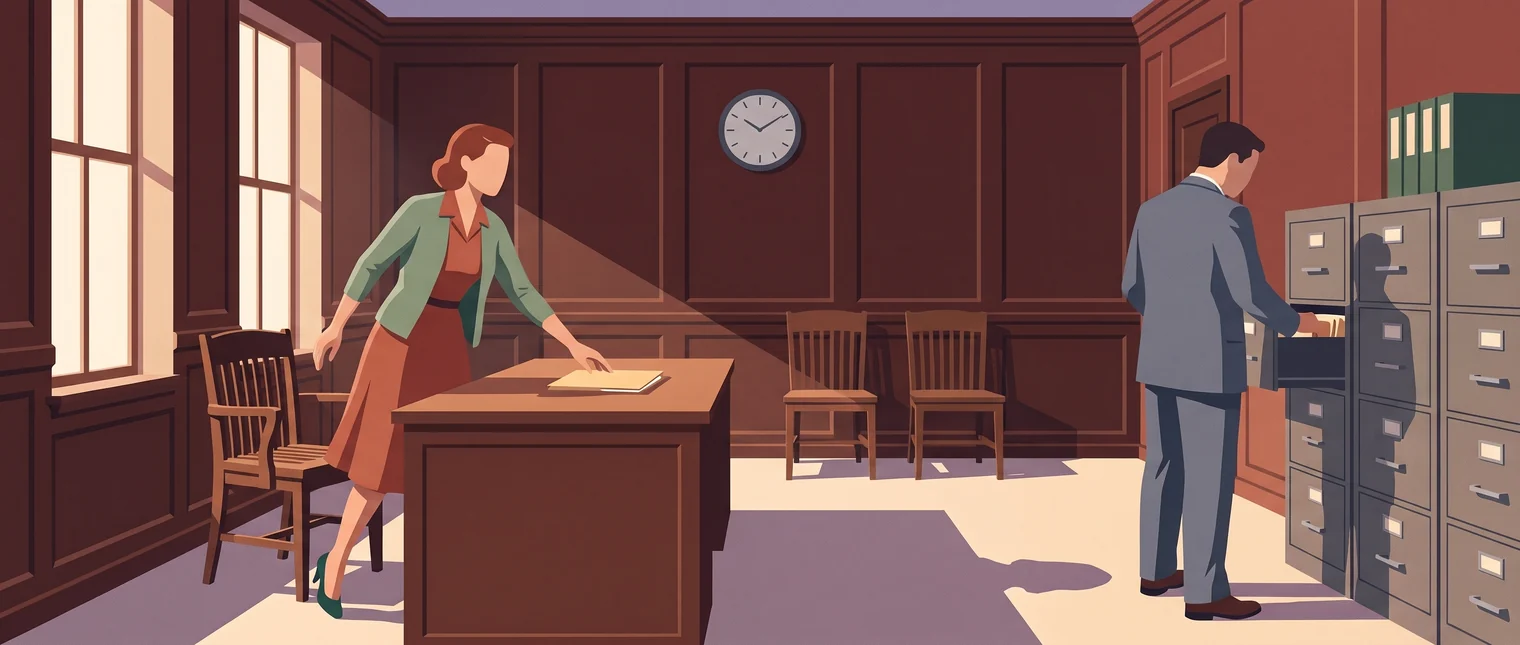
Briarmont scenes are a shared story. Almost everything under this heading comes down to one habit: leave room for other people to decide what happens to their own characters.
Don't force outcomes
Write what your character attempts, and let the other player decide how their character responds.
No:
/me grabs the folder off the desk and walks out before Rai can stop her.
That post decided what Rai did, which was nothing, and ended the scene by itself.
Yes:
/me reaches for the folder on the desk, quick and quiet, hoping to be out the door before anyone looks up.
Now Rai gets a turn. Maybe she looks up. Maybe she doesn't. Either way the call is hers, and the scene keeps going.
The same applies to injuries, emotional reactions, whether someone notices you, and whether they believe you. All of it belongs to the other player.
Don't play an invincible character
A character who never fails, never gets hurt and never faces a consequence gives the people around them nothing to play. Losing a fight, getting caught, being wrong in public: those are the scenes people remember weeks later. Let them happen.
Don't metagame
Your character acts on what your character knows, not on what you know.
- You do not know someone's name until you have been told it in a scene.
- You did not hear the conversation on the other side of the room.
- You did not read about it on Discord, in the wiki, or in the town's newspaper, unless your character reads the newspaper.
When you are unsure whether your character would know something, assume they don't and let the story tell them.
Accept consequences
If your character commits a crime, they can be arrested. If they cause a scene in public, people will react and word will travel. If they take a risk, it can go badly. Actions leaving marks is what separates a town from a film set.
The Sheriff's Department, the hospital, the college and the town's businesses are all played by real people who will respond to what your character does. Play as though that is true, because it is.
Note. Briarmont's regions are Moderate-rated. Difficult themes such as crime, addiction, violence and illness have a place in the story, but in shared public spaces we handle them through implication and consequence rather than explicit depiction. Explicit content belongs only in private, access-restricted spaces. See the Community Standards.
Play the town as though it is full
Not every role in Briarmont has a player behind it, and the town should still feel inhabited. Assume the diner has a cook. Assume there are other students in the lecture hall. Assume somebody answers the phone at the fire station. Your character can notice a stranger across the street who never gets a name.
Stop short of speaking for another player's character, or for an organization you are not part of. You cannot decide what the Sheriff's Department did last night. The background of the world, though, is yours to fill in.
Story continuity
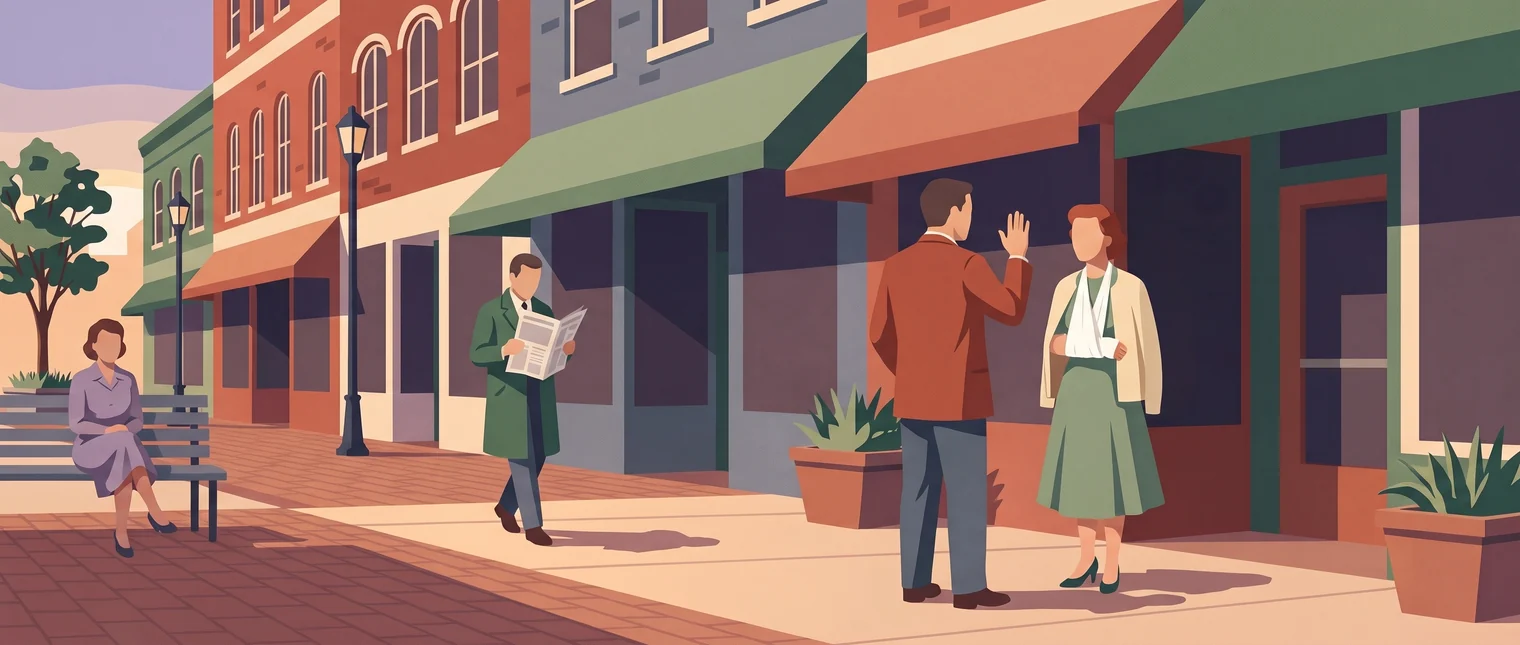
Briarmont has one continuous history, and every scene is part of it. What happened in a scene happened, and it stays happened after everyone logs off. This is the difference between a town and a series of unconnected evenings.
What counts as canon
A scene is canon for the people who were in it, from the moment it is played.
The posts are the record. When two people remember an exchange differently, scroll back and read it. Nobody's recollection outranks what was actually typed in local chat.
A scene is not canon for characters who were not there. They learn about it when someone tells them, when they read it in a bulletin, or when they run into the consequences. That cuts both ways: your character can be the last person in town to hear something, and playing that is more fun than skipping to the end.
Carry the last scene into the next one
The town notices what your character does, and so should your character.
- Injuries persist. A broken wrist takes weeks, not until your next scene. The HUD's health indicators track the mechanical half; writing the limp is your half.
- Arrests, debts, and favors persist. If a deputy booked your character on Tuesday, that deputy knows them on Friday. So, probably, does anyone who saw it happen.
- Relationships persist. Friendships, grudges, the person your character owes money to. These are the through-lines other people build scenes on.
- Your job, standing, and wallet persist, because the systems hold them for you. Reference them in character rather than letting them sit in the HUD unused.
If a consequence is inconvenient, play the inconvenience. A character working around an injury or avoiding somebody they wronged is a character with something to do.
Your character remembers people
Do not reintroduce yourself to someone you have known for months. It is the most common continuity slip and the easiest to avoid.
Keep your own notes. A few lines per character you have played with, saying who they are and what passed between you, will carry you further than memory does once the cast grows.
If you genuinely cannot remember whether your characters have met, ask in an IM before the scene starts rather than guessing in local chat.
Where the town's memory lives
You are not expected to hold all of this in your head. Four places keep it for you.
- The wiki holds town history, families, organizations and places. This is shared canon.
- Munibase holds your character: their profile, standing, job history, and the citizen directory everyone can search.
- Bulletins are the town journal. Anything published there is public knowledge, and your character may reasonably have read it.
- Your own notes hold the rest, which is most of it. Scenes in a bar at midnight do not get written up anywhere.
Time moves the way it moves
Scenes happen now. Town time runs with real time, so a week between scenes is a week for your character too.
If you want to play something set in the past, say so out of character before you start, so nobody mistakes a flashback for current events.
When you are away for a stretch, decide what your character was doing and stay consistent about it. They were around and busy, or they were out of town. Either works. Picking one and then contradicting it later is what causes trouble.
Undoing a scene
The default is that you cannot. A scene you dislike the outcome of is still a scene that happened.
There are real exceptions. A scene that broke down halfway, a scene someone had to leave in the middle of, a scene where consent was withdrawn, or a straightforward mistake that everyone can see. In those cases the fix is the same: everyone who was in the scene agrees, out of character, that it did not happen. Then it did not happen, and nobody references it again.
One person cannot make that call alone, and staff will not overturn a scene because it went badly for a character.
Note. If a scene left you uncomfortable rather than merely unlucky, that is not a continuity question. Take it to staff on Discord, as described in When something goes wrong below.
Changes that other people have to build on
Some things are permanent enough that they stop being your decision alone:
- A character's death.
- A permanent injury or disability.
- Leaving town for good.
- A crime serious enough to change how the town treats someone.
- Anything that alters an organization, a business, or a public place.
Agree these in advance with everyone affected, and bring in staff when they touch a group like the Sheriff's Department, the hospital or the college. Other people plan around this kind of change, so it has to hold once it lands.
Do not rewrite the town
Your character's own past belongs to you. Invent freely, as long as it does not contradict what the town already has.
The wiki is canon for Briarmont's history. Your character cannot have attended a school the town does not have, worked for a business that never existed, or survived a fire nobody has ever mentioned. Anything the whole town would know about is shared canon, and shared canon is not yours to add to on your own.
If you want something new in the town's history, a building, an organization, an event, ask staff. That is how it becomes real for everyone rather than true for one person.
Dice and challenges with the HUD
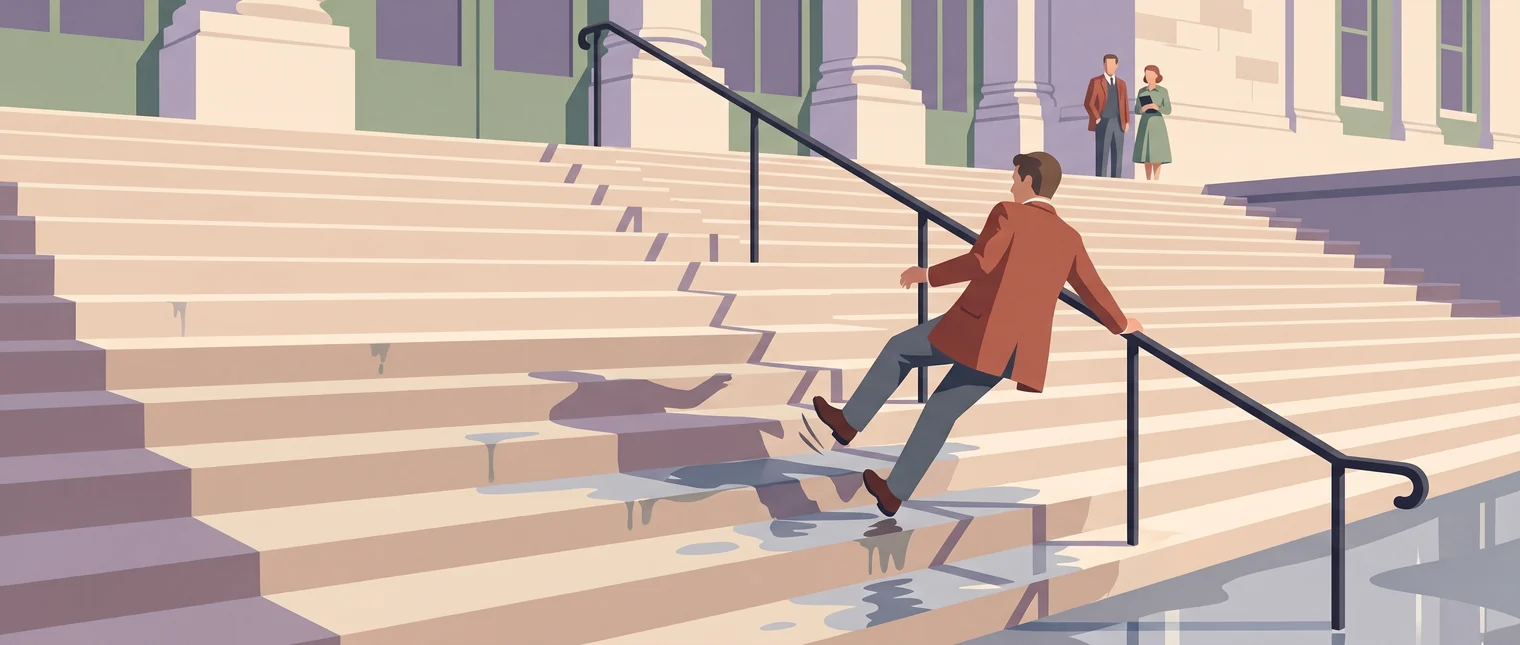
The HUD rolls a twenty-sided die, and it exists for one job: deciding something when nobody at the table should get to decide it.
Does she make it up the icy steps? Does he notice the car following him? Does the folder come off the desk before anyone looks up? Those are good dice questions. The answer is genuinely uncertain, and the scene improves when nobody controls it.
When to use dice
Dice are optional, and they apply to a scene only when everyone in it has agreed to use them.
Good uses:
- A small physical uncertainty: a slip, a catch, a lock, a lie.
- A contested action, where one character is trying to do something to or past another.
- Any moment where two players want different outcomes and neither should simply win.
Where dice do not belong: anything that needs consent. A roll creates no permission. Permanent injury, a character's death, sexual outcomes, lasting psychological damage, anything that changes another character's life: those are agreed out of character, before the scene gets there, every time. A high roll is not an argument.
How to roll
Open the HUD's dice tool. You have two controls:
- Roll. A straight d20, with no context and no target. Use it when you have already described what you are attempting and just need a number.
- Attempt to. You type what your character is trying to do, and you may pick a nearby player who gets to counter-roll. Reach for this one most of the time, because it announces the stakes to the whole room before the die lands.
Rolls use your active character's name, so set your character in Profile first.
A self-targeted roll
Nobody is opposing you; you just want the town to decide.
[14:42] .: Nikolina attempts to walk up the stairs. (( Challenge initiated: no counter-roll required. ))
[14:42] .: (( Nikolina rolled a 17 ))
A 17 out of 20 is a comfortable success. Now narrate the result in your next post, which is the step people forget. The die produced a number; you produce the scene:
/me takes the stairs two at a time, catches the rail once on the turn, and is at the top before the door has finished swinging shut.
Had it been a 3:
/me makes it four steps before her heel goes out from under her, and she comes down hard on one knee with a sound that carries.
Both are good posts, and the low roll gives you more to play.
A contested roll
Someone is on the other side of the action. Use Attempt to and select them.
[14:42] .: Nikolina attempts to snatch the folder from Rai. (( Challenge initiated: Rai may counter-roll. ))
[14:42] .: (( Nikolina rolled a 13 ))
[14:42] .: (( Rai rolled a 16 ))
Rai's 16 beats the 13, so Rai's character gets the outcome and Rai narrates it, because she won it. Then the rotation carries on, and Nikolina responds to what Rai wrote.
If Rai had rolled a 9, Nikolina would narrate the folder coming off the desk, and Rai would still write how her character reacts to having just lost it. Winning the roll settles the outcome. What the other character feels, says or does next stays with their player.
Dice and post order
Rolls sit inside the rotation rather than suspending it.
- Agree the stakes first, out of character, before anyone rolls. One line: what is being attempted, and what happens on each result.
(( if I win she gets the folder, if you win I'm caught reaching for it )) - The acting player posts the attempt in character, then rolls.
- The defending player counter-rolls, if there is one.
- Whoever won narrates the outcome in their turn.
- The rotation resumes where it left off.
Deciding the stakes after seeing the number is where dice arguments come from. Ten seconds of agreement beforehand prevents essentially all of them.
Note. For anything serious, such as a fight, a chase, an arrest, or a scene with real consequences, settle the rules in IMs before it escalates. How many rolls? What does losing cost? Is anyone getting hurt, and how badly? Answer that first and the scene runs itself.
The town's systems, inside a scene
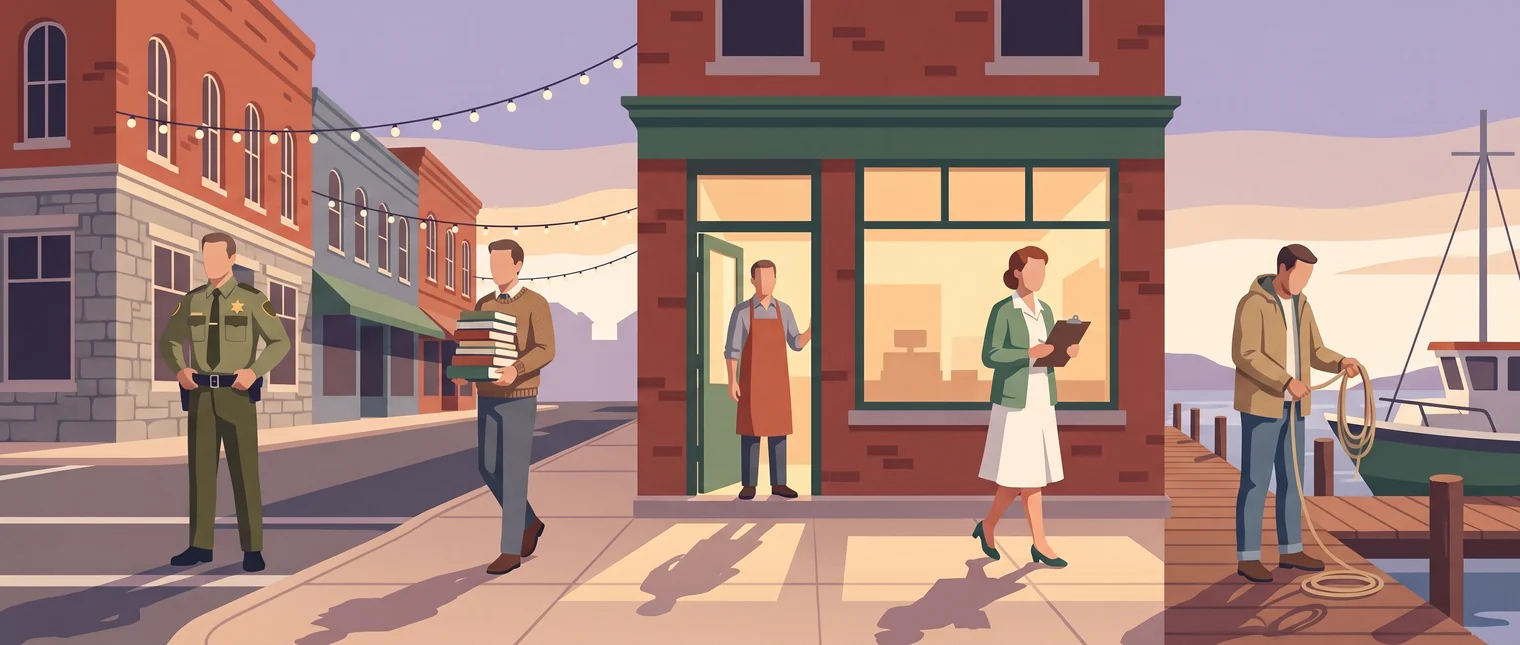
Everything the HUD does is there to be played. Here is what each system gives you when you are standing in a scene.
Profile. Who you are right now. Your active character drives your titler, your dice name, your wallet and your standing. If you play more than one character, switching here is how you change hats.
Titler. How the room reads you before you have said a word. It carries your character's name and your current mode, so keep it accurate.
Quests. The town handing your character something to do. A quest gives you a reason to walk into a building and talk to someone, which solves the hardest problem in roleplay for you. Play the objective as your character pursuing it rather than as a checklist. See Doing quests.
Jobs. A shift is a scene. Clocking in at the diner puts your character behind the counter for a reason, in a place people walk into. Some of the best unplanned roleplay in town happens to somebody who was only working. See Getting a job.
Standing. Your character's footing in the community, earned over time. It reflects what you have actually been doing in town, and it is worth referencing in character: people know your character, or they don't. See Reputation & standing.
Wallet. Briarmont currency, held by your active character. Paying someone in a scene is a real transfer, and it lands better than describing one. Tap the wallet icon and pick the person; they need an active character to receive it.
Health status. Private indicators for conditions your character is carrying: injury, illness, exhaustion, intoxication and more. They are hints to you, and playing them is your job. If your character is injured, they limp in your emotes; the HUD will not do it for you. Tap an indicator for a fresh reading.
Calendar. What the town is doing this week. Events are where you meet people you would never bump into on your own route.
Map. Travel. Use it between scenes; a character who teleports out of a conversation is a character who walked out of it.
Weather. The current conditions, shared by everyone in town. It is free detail for any scene and the cheapest opening line there is. If it is raining, everyone who comes through the door is wet.
When something goes wrong
Scenes move fast, so something will.
Ordinary mistakes. You missed an emote, you answered a line meant for someone else, you posted an action that contradicts something already established. Say (( sorry, missed that. disregard )), adjust, and keep going. Everyone here has done it.
Someone is playing badly. Forcing outcomes, metagaming, ignoring the rotation. Assume inexperience first, because it usually is. A friendly IM fixes it nine times out of ten: "Hey, could you leave the outcome open next time? I'd like to get a turn."
Someone is making you uncomfortable. That is a different problem, and it is not yours to manage alone. Step out of the scene and bring it to staff on Discord. You do not owe anyone a scene, and you never have to negotiate your way out of one.
A scene has gone somewhere you don't want. Say so. (( I'd rather not take this further, can we fade here? )) is a valid thing to type at any point, for any reason, and the correct response from everyone else is "sure."
Most of this guide is craft: advice on how to play well. Two parts of it carry weight. The first is the in-character expectation, set out in Where the line is above. The second is anything that overlaps the Community Covenant, which is the enforceable document. Where this guide and the Covenant touch, the Covenant wins.
The short version
- You are in character everywhere on Briarmont land. Local chat is your character's voice.
- One post, starting with
/me, novel style. Action and speech together, quotation marks around what is said. No asterisks, no bare dialogue in local chat. - Turn on Immersive from the HUD's RP pencil. Nametags off, your text in your character's name.
- OOC goes in IMs or Discord. Local-chat OOC is a last resort, in double parentheses, kept short and rare.
- An OOC titler marks you unavailable. It does not open public chat.
- One slip is nothing; a pattern is a staff matter. Keep it up after being asked and it escalates like any Covenant breach: a private word, a warning, then removal.
- Two or more people means post order. Everyone posts once, in order, before anyone posts twice.
- Respond to the post before yours. Wait, read, then write.
- Attempt, don't decide. Other players own their characters' reactions.
- Your character knows only what your character knows.
- Consequences are the story. Let things go wrong.
- What happened, happened. Injuries, arrests and grudges carry into the next scene, and undoing one takes everybody who was there agreeing to it.
- The town's history is shared canon. Your character's past is yours to invent; Briarmont's is not.
- Dice resolve uncertainty, never consent. Agree the stakes before the roll; narrate the result after it.
- Post your exits.
When you are unsure, ask the person you are playing with. Everyone in the room wants the same scene to work.