
Edward Plainview
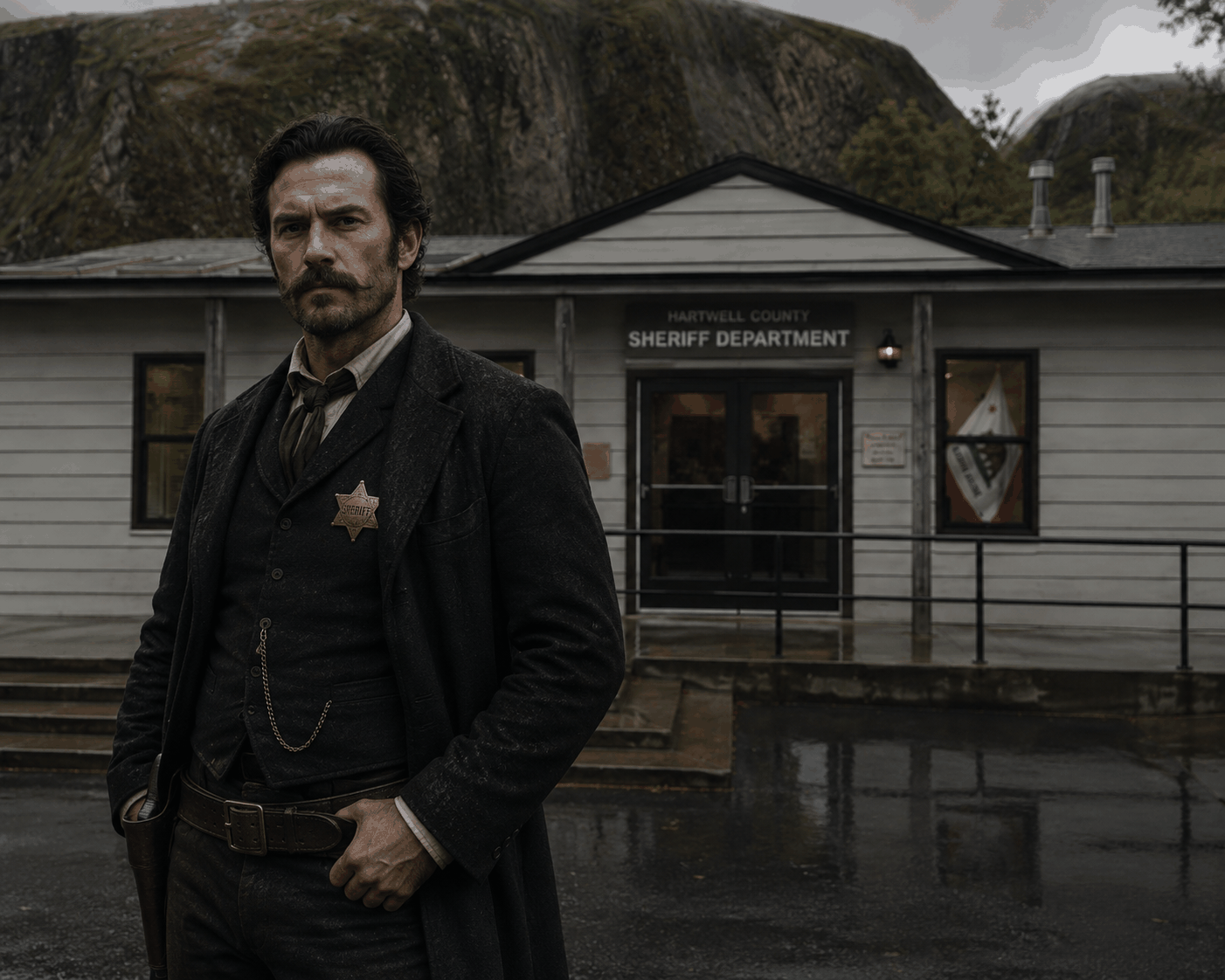
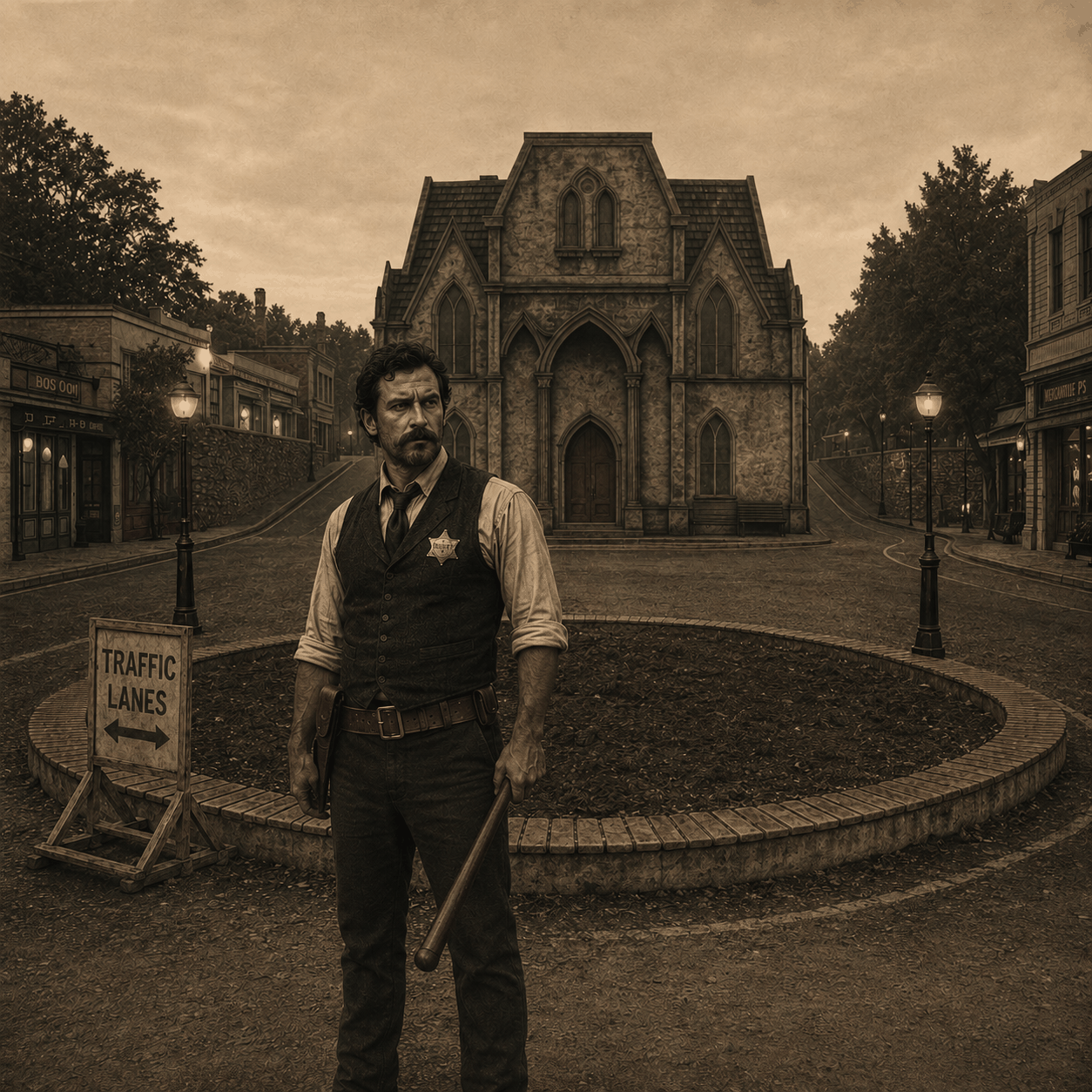 | |
| Edward Plainview | |
| Born | 1826 |
|---|---|
| Died | 1902 |
| Honorific | Sheriff |
| Sex | Male |
| Circumstances of death | See “The Circumstances of His Death” |
| Organization | Hartwell County Sheriff's Department |
Edward Plainview was born in New York City in 1826. After the Great Fire of 1835 ruined his family, his parents joined the westward movement in search of a new life. The journey was long, poor, and punishing. His parents died before reaching California, leaving Edward to continue alone.
He arrived in Briarmont in 1842 as an orphaned teenager. By the time Elias Hartwell began consolidating power in the region, Plainview had already learned how to survive through toughness, labor, silence, and usefulness. Hartwell recognized those qualities and made use of them.
When Hartwell County was formed in 1858, and the Hartwell County Sheriff’s Department was founded in 1859, Plainview became its first Sheriff at approximately thirty-three years old.
He was not a reformer. He was not an idealist. He was a survivor who understood that law was most powerful when it served the men who controlled land, roads, money, and work.
Role in Hartwell County
Plainview’s Sheriff’s Department performed the standard duties expected of a rural county law enforcement agency: preserving peace, serving warrants, arresting offenders, holding prisoners, responding to violence, and protecting county officers.
However, his administration is most strongly associated with the early land conflicts of Hartwell County. Between 1859 and 1900, the department handled violent disputes over land ownership, timber access, road construction, settlement boundaries, water rights, and local resistance to Hartwell’s expanding authority.
Plainview’s office helped define which claims were treated as lawful and which were treated as trespass, disorder, or resistance. This made him essential to Hartwell’s vision of a stable county, but it also tied the department’s early reputation to selective enforcement and unequal protection.
To landholders, investors, and business owners, Plainview brought order.
To poorer residents, laborers, Indigenous locals, isolated homesteaders, and those displaced by timber expansion, he could represent the armed authority of Hartwell’s county government.
Both interpretations should be true.
Legacy
Edward Plainview is remembered as one of the foundational figures of Hartwell County law enforcement. As the first Sheriff of Hartwell County, he helped establish the authority, structure, and public presence of the Hartwell County Sheriff’s Department during the county’s earliest years.
His legacy is closely tied to the challenging work of establishing order in a young and rapidly developing county. Hartwell County’s early decades were shaped by settlement, timber expansion, land claims, labor disputes, and the practical challenges of enforcing law across a rural and often unsettled region. Plainview became one of the central figures in that process.
Public Image
In official county memory, Plainview is most often represented as a stern but capable frontier lawman. He served during a period when the Sheriff’s Department was expected to handle a wide range of duties with limited resources, including issuing warrants, making arrests, handling prisoners, protecting county officers, and responding to violence or disorder.
To many early landholders, business owners, and civic leaders, Plainview represented stability. He helped establish the Sheriff’s Department as a necessary institution at a time when Hartwell County was still forming its legal and civic identity.
Character and Temperament
Plainview was known as a disciplined, severe, and practical man. He was not remembered as theatrical or sentimental. His authority came from control, consistency, and reputation.
He understood the importance of command presence and was known for using silence and stillness as effectively as speech. Those who respected him described him as reliable, firm, and difficult to intimidate. Those who disliked him often remembered the same qualities less kindly.
Plainview believed strongly in order. He viewed disorder as dangerous, especially in a county where property claims, labor tensions, and local disputes could quickly become violent. This made him effective, but also contributed to his reputation as a hard and uncompromising figure.
Relationship with Elias Hartwell
Edward Plainview’s career cannot be separated from the early development of Hartwell County under Elias Hartwell’s influence.
Hartwell County was still young when Plainview became Sheriff, and many of its institutions were being established for the first time. Hartwell represented the county’s economic and civic ambitions, while Plainview represented the law enforcement structure needed to support a functioning county government.
Their relationship appears to have been practical rather than personal. Hartwell needed capable officials who could help stabilize the county. Plainview needed legitimacy, position, and a clear role within the new order. Together, they became part of the county’s early foundation: Hartwell as the driving civic and industrial figure, and Plainview as the first man to carry the authority of the Sheriff’s office.
Role in the Early Sheriff’s Department
Plainview’s administration helped define the early character of the Hartwell County Sheriff’s Department.
Under his leadership, the department became associated with firmness, field readiness, and direct action. Deputies were expected to know the roads, camps, settlements, and disputes of the county. The work was often physical, personal, and immediate. The department did not yet resemble a modern law enforcement agency with specialized bureaus and formalized procedures.
Plainview’s era was marked by the practical realities of early county policing. The Sheriff’s Department responded to violence, theft, trespass claims, labor disputes, missing persons, and conflicts over land and access. These responsibilities gave the department an early reputation as one of the county’s most important public institutions.
Retirement and Decline
Plainview retired as Sheriff in 1878, after nearly two decades in office.
Retirement appears to have been difficult for him. The office had given his life structure, authority, and purpose. Without it, he became increasingly isolated. Later accounts describe him as a heavy drinker in his final years, with alcohol becoming a significant part of his decline.
His drinking has been interpreted in different ways. Some accounts suggest that Plainview struggled with the loss of authority after leaving office. Others point to the physical and emotional toll of a hard life spent in difficult conditions. Whatever the cause, his final years were quieter, lonelier, and less publicly respected than his years as Sheriff.
Edward Plainview died in 1902 from liver complications widely believed to be connected to chronic drinking after his retirement.
The Circumstances of His Death
Edward Plainview was found dead on November 18, 1902, after years of isolation and heavy drinking, with later county records attributing his death to liver complications likely caused by chronic alcohol use.
Historical Interpretation
Plainview’s legacy remains divided, though not easily reduced to praise or condemnation.
To some, he was the necessary first Sheriff: a capable lawman who helped bring order to Hartwell County during a difficult period. To others, he represents the severity of early county law enforcement, when public authority was still developing and legal decisions often had immediate consequences for families, workers, landholders, and local communities.
This tension is part of why Plainview remains important. He was not simply a heroic founder, nor is he remembered only as a harsh man. He represents the first form the Sheriff’s Department took: practical, forceful, local, and shaped by the demands of a county still defining itself.
Place in HCSD History
In the larger history of the Hartwell County Sheriff’s Department, Plainview stands as the department’s first model of authority.
Later, sheriffs would represent different eras. Harold “Hal” Humbolt came to symbolize mid-century public service, local identity, and the department’s mounted patrol tradition. The modern HCSD emphasizes professionalism, accountability, public trust, and community partnership.
Plainview belongs to an earlier period. He represents the Sheriff as a direct enforcer of county order, working in a time before the department became a broader public-safety agency.
For Briarmont and Hartwell County, Edward Plainview remains a foundational but complicated figure: a survivor, a lawman, and the first person to give the Sheriff’s badge its authority in the county’s public life.