
Nathaniel Vale
 | |
| Nathaniel Vale | |
| Born | 1843 |
|---|---|
| Died | Unknown |
| Gender | Male |
| Circumstances of death | Unknown |
| Organization | Hartwell Timber Co. |
Overview
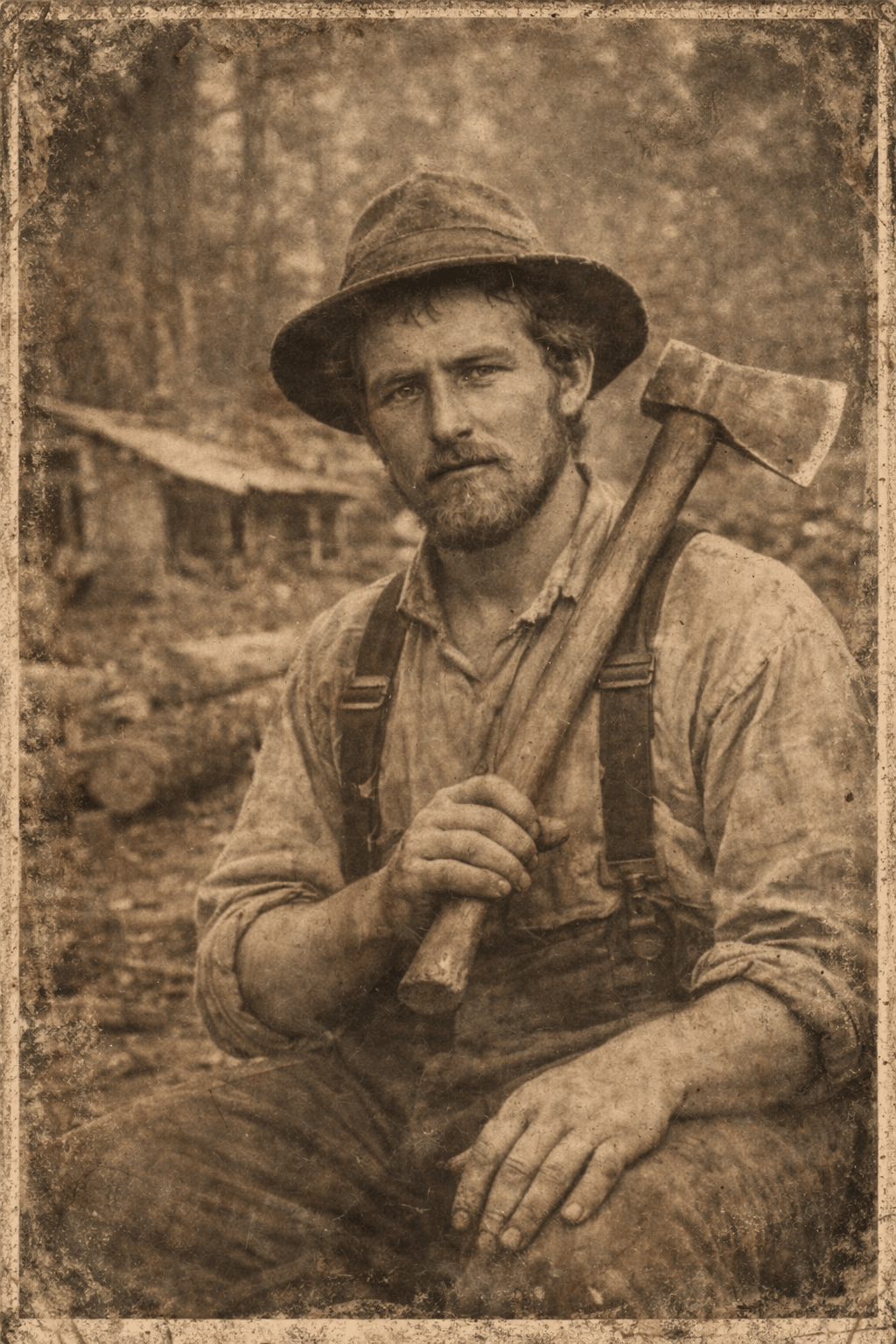
Nathaniel Vale was born around 1843 to a struggling farm family somewhere on the western plains, where drought, poor soil, and bad harvests kept hunger close at hand. At fifteen, he left home and followed the great western traffic into California, chasing the same promise that had pulled thousands of others west in the years after gold was discovered. He did not find gold. He found the forests.
Before Hartwell Timber Co.
For a time, Nathaniel drifted between mining camps, hunting parties, freight crews, and isolated settlements along the northern coast. He learned quickly how to trap, dress game, read spoor, and move through country that swallowed men who treated it carelessly.
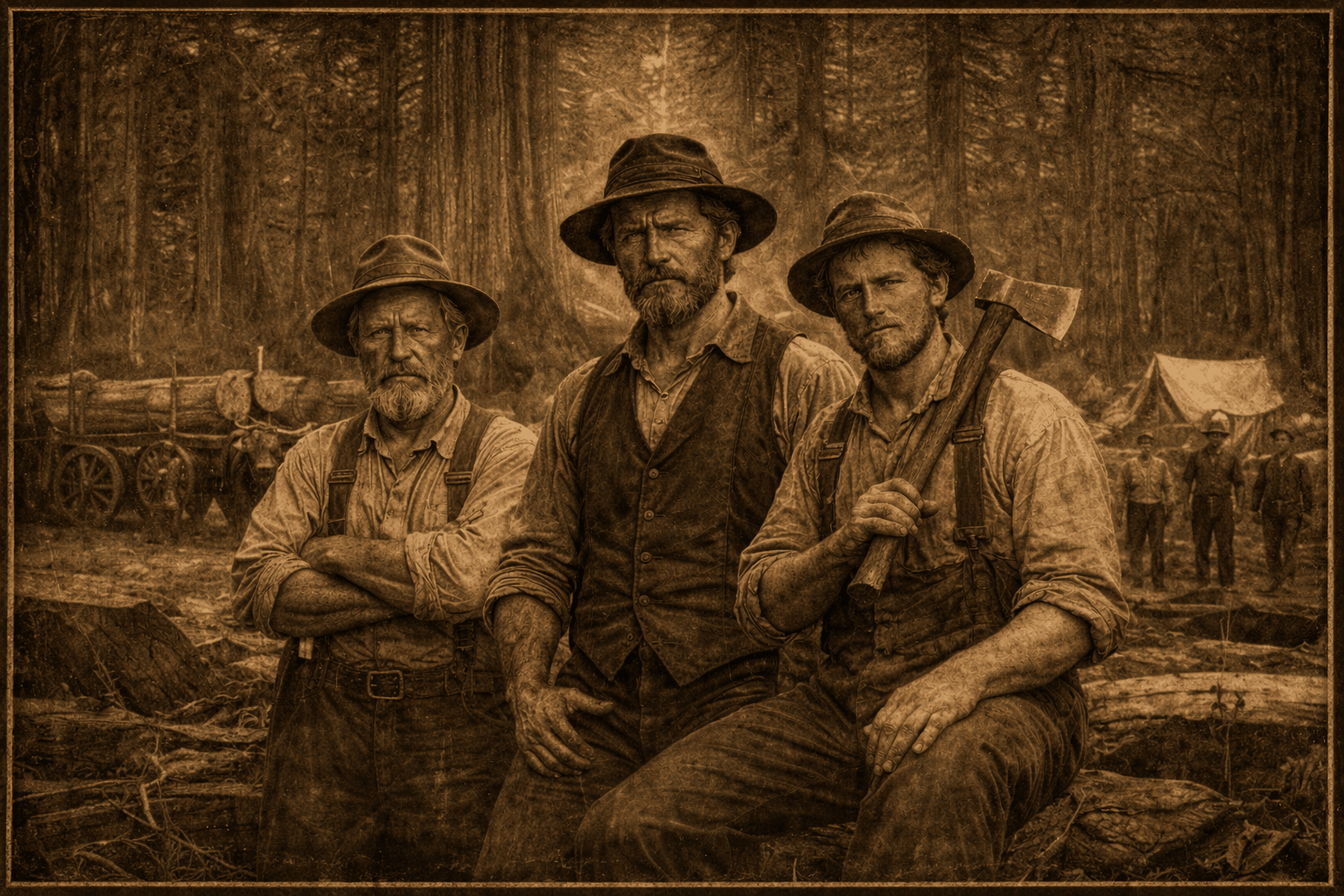
By the time Elias Hartwell began organizing his timber operations near Briarmont in 1857, Nathaniel was only sixteen, but he already knew the surrounding woods, ridgelines, and waterways well enough to be useful. Hartwell hired him as a woods guide, hunter, and terrain specialist, relying on him to read the land ahead of the company’s crews and to keep men fed when supplies ran thin. Hartwell’s later operations would leave deep scars on the region, but in Nathaniel’s early years, he was one of the few men in camp who seemed to love the forest for more than what could be taken from it.
Years Under Hartwell
Nathaniel quickly became one of the most quietly valuable men in Hartwell’s employ. He was not a foreman, not a bookkeeper, and not the sort of man whose name appeared often in ledgers, but the company relied on him all the same. He knew which gullies flooded first after rain, which ridgelines could be crossed safely with men and animals, where game still moved when supply wagons were delayed, and which stretches of forest should be approached with caution.
In the early years of Hartwell Timber Co., Nathaniel often worked ahead of the main crews, scouting routes and identifying ground that could bear men, tools, and loaded teams. He guided cutters into dense stands, helped hunters and haulers find their way back to camp in fog and rain, and kept watch for unstable slopes, swollen creeks, and animal trails. When camp stores ran low, he was often the one sent out with a rifle, traps, or a skinning knife to bring back enough meat to stretch rations another few days.
Men who worked alongside him remembered him as patient, self-contained, and difficult to unsettle. He was more at ease in the forest than in camp, and there were times he disappeared into the woods for hours at a stretch, only to return with fish, rabbits, deer, or some useful bit of knowledge about the land ahead. Though younger than many of the other men, he earned their respect because he rarely pretended to know more than he did, and rarely gave careless advice.
As Hartwell’s operations expanded through the 1860s, Nathaniel’s relationship to the company grew more complicated. He remained loyal to the work and to the men he had come up beside, but he also understood better than most what the company was destroying. He saw the game pushed farther out. He watched streams choke with silt and clearings widen into scars. He knew where the forest had once been thick enough to blot out the sun, and he lived long enough to watch some of those places stripped bare. If he ever spoke openly against Hartwell, no record of it survives. But those who later wrote about him often described him as a man who carried a private grief for what was being lost.
Even so, he stayed. Some said it was because Hartwell Timber Co. was the closest thing he had to a home. Others believed he remained because he thought knowing the land gave him some small chance to lessen the harm, or at least help men survive it.
Illness and Disappearance
By 1870, Nathaniel had begun to change. At first, it was easy enough to explain away. He looked tired more often. He missed details he would once have caught at a glance. He was said to suffer spells of fever, headaches, and confusion, followed by stretches where he seemed almost himself again. Then came the days when he drifted through camp distracted and short-tempered, or vanished into the woods without saying where he was going.
Those who knew him best understood that something was badly wrong, but no one seemed able to do much for him. Briarmont was still a rough town in those years, and whatever skill Nathaniel had for reading the land, it did not extend to asking for help. Some thought he was simply worn down after years in the forest and camp. Others whispered of drink, bad blood, or some sickness picked up in town and left untreated. Whatever the cause, his condition worsened.
One day, he left and did not return.
At first, his absence did not cause immediate alarm. Nathaniel had always been a man who could disappear into the woods and reappear later with some practical explanation for it. But as the hours turned to a full day, and then longer, the mood in camp changed. A search was made through the nearby ridges, creek beds, and game trails he was known to follow. Nothing was found.
In the years that followed, Nathaniel Vale’s disappearance became one of the older stories attached to Hartwell Timber Co. Some said he lost himself in the wilderness he had once known too well to fear. Some said he chose not to come back, turning his back on Hartwell’s camps and walking north until the forest swallowed him whole. Others insisted the woods had finally claimed one of the few men who had ever truly belonged to them.
No confirmed trace of Nathaniel Vale was ever found again.