
Key Landmarks
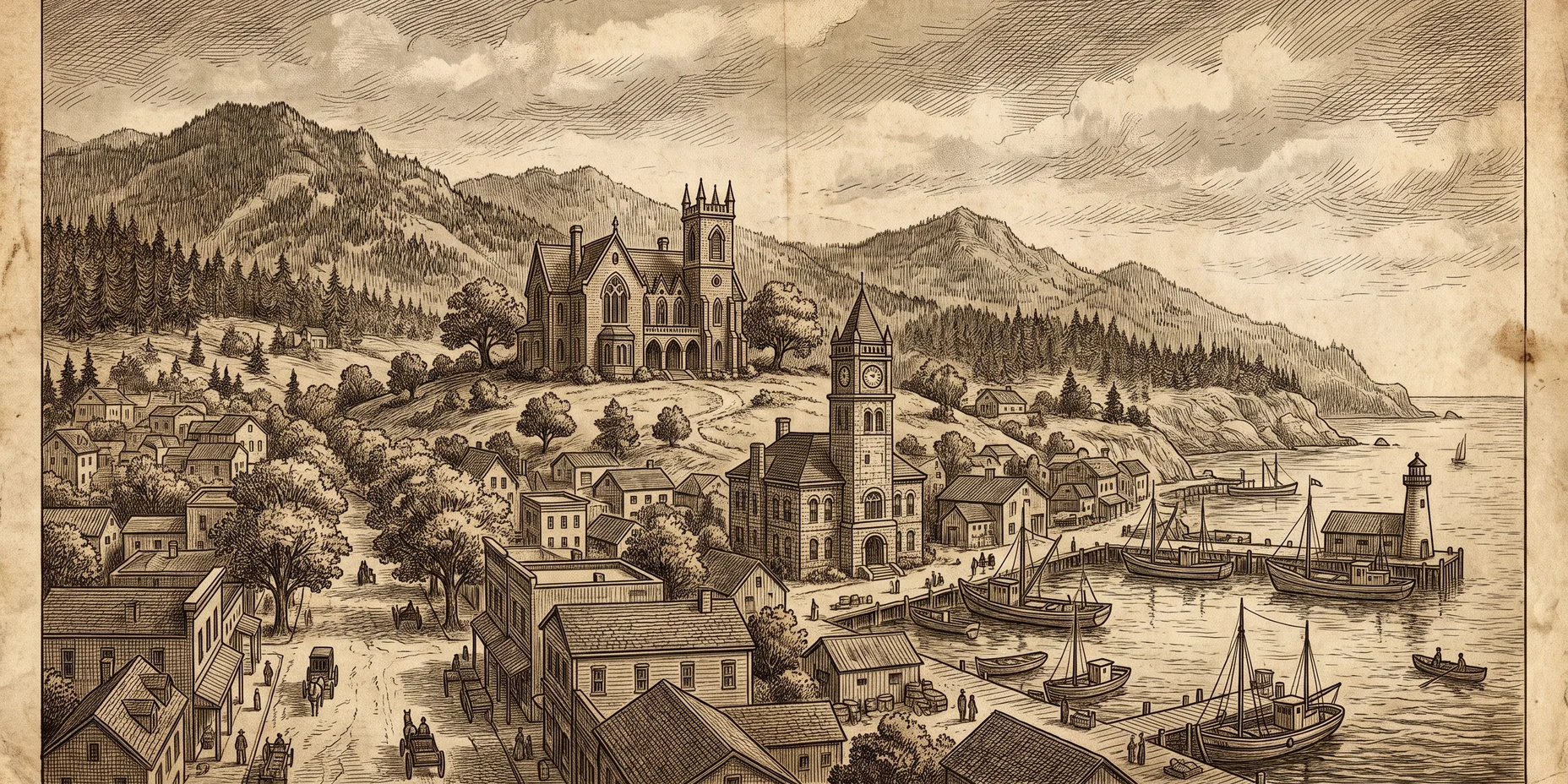
Briarmont’s landmarks are not merely notable places on a map, but visible traces of the town’s long and complicated history. Many of them stand at the intersection of memory, industry, restoration, and local identity, reflecting the forces that shaped Briarmont from its timber-era beginnings into the town it is today. From spaces tied to Elias Hartwell’s rise and the environmental damage left in the wake of his operations, to places later reclaimed through preservation, civic stewardship, and study, Briarmont’s landmarks reveal the town’s habit of carrying its past in plain sight rather than burying it.
Several of the town’s most important landmarks are bound to the same historical arc: the exploitation of the surrounding landscape, the decline of the old timber order, and the eventual founding of Oakridge in 1918 as a response to the damage done to the land. That mission of restoration, research, and stewardship became one of the defining themes of modern Briarmont, and many local sites still carry the mark of that transition.
Other landmarks endure because Briarmont has always been a town of stories as much as records. Some places are historically protected because of who built them, who worked there, or what they represent. Others draw their meaning from folklore, local ritual, and the uneasy overlap between documented history and the stories residents continue to tell. Together, these landmarks form a kind of civic memory: a collection of sites through which Briarmont remembers what was taken, what survived, and what its people chose to protect.